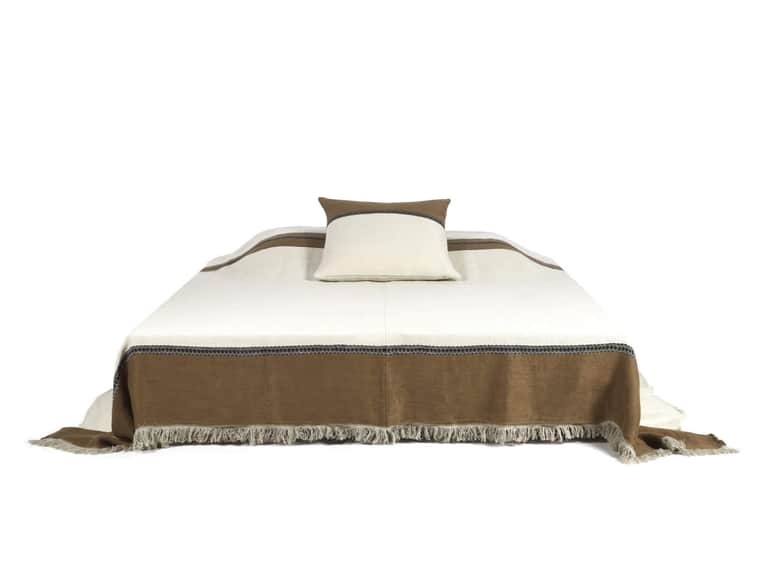
Blankets and quilts add warmth, texture, and flexible layering to bedroom bedding. They can be used over sheets or duvet covers, adjusted to suit changing temperatures, and coordinated with pillows to create a comfortable sleeping environment. Fabric, weight, and construction influence how a layer feels and how it functions throughout the year.
Coverlets are generally lighter than traditional quilts and comforters, making them useful as a top layer in mild weather or as an additional layer when nights are cool. Their practical profile can help keep bedding neatly arranged without adding substantial bulk, while their surface contributes color and texture to a bedroom.
The Batsi Coverlet is one of the named options in this category. As a coverlet, it serves as a decorative and functional bedding layer over sheets, and can provide light coverage for everyday use. Its role in a bedding arrangement can be complemented by pillows and coordinated duvet covers.
The Etienne Coverlet and Propriano Coverlet are also designed for layering within a bedroom setting. Their coverlet format offers an alternative to heavier blankets, supporting adaptable bed coverage across seasons. When assessing either option, consider its dimensions, material, care requirements, and how its weight suits the existing sheets and bedding.
Blankets and quilts are intended primarily for bed coverage, although their materials and construction determine warmth, drape, and maintenance needs. For a coordinated home textile scheme, bedding layers may be considered alongside pillows, sheets, and duvet covers; bath textiles serve a separate purpose and are selected for bathroom use.
 Bedding