Bath textiles · Buying and care guide
Choosing a Coyuchi Bath Robe: Fabric Weight, Texture, and Care
The right bath robe is less about one universally perfect fabric and more about how you want it to feel in your daily routine. Weight, texture, absorbency, fit, and laundry habits all play a part. When considering a Coyuchi bath robe, start by deciding whether you want a plush layer for post-shower warmth or a lighter, breathable wrap that is easy to wear around the house.
A robe can be the first thing you reach for after a shower, during a slow morning, or while winding down at night. Those moments make comfort personal: one person wants a soft, substantial layer that feels like a towel, while another prefers a relaxed garment that allows air to circulate and moves easily from room to room. The fabric determines much of that experience, but construction and care matter, too.
Before comparing Coyuchi bath robes, look beyond a product’s color or silhouette. Ask what the fabric is designed to do, how it is likely to feel against damp skin, and whether its washing instructions fit your household routine. A robe is a garment, not a substitute for a towel, and different fibers answer different needs. Understanding those distinctions makes it easier to choose a robe you will enjoy wearing—and to keep it comfortable through repeated laundering.
Begin with the job you want the robe to do
Think about the moment you most often put on a robe. If you want to step out of the shower and stay wrapped in a warm, absorbent layer, a terry or other looped cotton robe may suit you. Its surface is built to hold water, much like a towel, and its fuller construction can feel comforting in a cool bathroom. That same plushness, however, can make it heavier and slower to dry.
If you mainly want a cover-up for getting ready, lounging, or adding a light layer over sleepwear, a woven linen robe offers a different kind of ease. Linen is typically less towel-like than terry: it feels flatter and more textured, and it does not have the same deep pile of loops to absorb water. It can be a good choice for people who appreciate a breathable, relaxed garment, but you may still want to towel-dry thoroughly before putting it on.
Neither option is automatically better. A thick robe can be welcome on a cold morning but feel excessive in a warm climate. A light robe can be comfortable in summer or in a heated home but may not deliver the enveloping warmth someone expects after bathing. Start with the use case, then compare the specific fabric and construction rather than relying on the word “bath” alone.
What fabric weight can—and cannot—tell you
Textile weight is commonly expressed in grams per square meter, or GSM. In general, a higher number indicates more fabric mass in a given area, but it does not tell the whole story about softness, warmth, absorbency, or quality. Fiber type, yarn, weave, finishing, and the garment’s cut all affect how a robe feels. Two robes with similar stated weights can have noticeably different drape and texture.
For a robe, weight is best understood as one clue about the balance between coverage and mobility. A substantial fabric may feel reassuring and warm, while a lighter fabric may be easier to pack, wear over clothing, or use in a warm room. Heavier textiles can also take longer to dry after washing, particularly if they are densely constructed or the laundry area has limited airflow. Weight alone cannot predict the exact drying time, so consider your dryer, climate, and available hanging space as well.
Check the product details for a stated fabric weight when one is provided, but do not assume a number that the maker has not published. If weight is not listed, use the available fabric description and construction details, then consider whether the robe is intended to be plush, airy, or somewhere between those sensations. When in doubt, ask the retailer for specifications or review the manufacturer’s product information.
It is also useful to think about how the robe will feel when dry versus slightly damp. A thick cotton robe may feel cozy but can become noticeably heavier when wet. A woven linen robe generally has a more garment-like drape, but it should not be expected to wick and hold water in the same way as a towel. Matching expectations to the fabric is one of the simplest ways to avoid disappointment.
Texture: plush loops or a relaxed woven hand?
Texture shapes the first impression when you put a robe on. Terry cloth has raised loops that give it a familiar towel-like surface. The loops increase the surface area available to take up moisture, and they create a cushioned feel. Depending on the robe’s construction, terry can feel thick and cozy, although some people find a dense pile bulky or too warm indoors.
Linen has a flatter woven surface and a more visible natural texture. It can feel crisp at first, then soften with regular use and laundering. That evolution is part of its appeal for many people: the fabric develops a lived-in character rather than maintaining a uniformly plush finish. Linen’s texture is not a flaw to be smoothed away; it is a characteristic of the material. If you prefer a silky, fleece-like, or heavily cushioned feel, linen may not provide the sensation you are seeking.
Finishing methods can influence the initial hand of a fabric. A prewashed or softened garment may feel more relaxed when new, while another may begin with a firmer feel and become more supple as it is worn and washed. Product descriptions may mention garment washing, stone washing, or other finishes, but care directions still take priority. Avoid using extra fabric softener in an attempt to make every robe feel plush: residues can build up and may affect how some textiles absorb moisture.
Texture is also a practical matter. A robe with a smooth, light surface may layer comfortably over pajamas and take up less room in a suitcase. A robe with a thick pile may feel more protective when you are cold, but can be cumbersome for travel or storage. Think about where the robe will live and how often you will carry it from one room—or one destination—to another.
Absorbency and warmth are related, but not interchangeable
People often want one robe to absorb water, provide warmth, and remain comfortable for hours. Some fabrics can serve several roles, but no textile behaves identically in every situation. A looped towel robe is generally the more direct choice when absorbency is the priority. Its construction is designed to take up moisture, though it still requires proper drying between uses.
A linen robe is better approached as a breathable layer than as a wearable towel. Its lighter, woven character can feel pleasant after you have dried off, especially if you dislike the weight of thick terry. Linen may help manage comfort in changing temperatures, but it should not be described as having the same absorbency as a high-pile cotton robe. If your routine is to put on a robe while still dripping wet, select a towel-like construction or keep a towel close at hand.
Warmth depends on more than fabric weight. The robe’s coverage, sleeve length, fit, weave, and the temperature of your home all matter. A loose fit may make movement and layering easier, while a closer fit can feel less bulky under another layer. A shawl collar offers extra coverage around the neck, but the way it sits depends on the robe’s pattern and how it is tied.
Consider the seasons, too. A robe used in a warm bathroom may feel different from one worn in a drafty bedroom. If you live in a humid climate, drying and ventilation may be as important as warmth. If you are sensitive to overheating, a breathable woven robe may be more comfortable for extended lounging than a thick, absorbent style.
Construction details that affect everyday comfort
Small design choices have an outsized effect on whether a robe feels convenient. Check the closure first. A wrap robe with a self-tie belt allows adjustment at the waist, which can accommodate different layers beneath it. Make sure the belt is long enough to tie securely and that the loops are placed where you can comfortably reach them. A belt that slips or sits awkwardly can make an otherwise appealing robe frustrating to wear.
Look at the collar, sleeves, and pockets. A shawl collar adds coverage and a classic robe shape. Long sleeves may feel cozy, but overly long cuffs can get in the way when washing your face or preparing breakfast. Pockets are useful for small items and for warming your hands, though their placement and depth influence how practical they are. Reinforced seams and neat finishing can contribute to durability, especially at stress points such as pocket openings, belt loops, and cuffs.
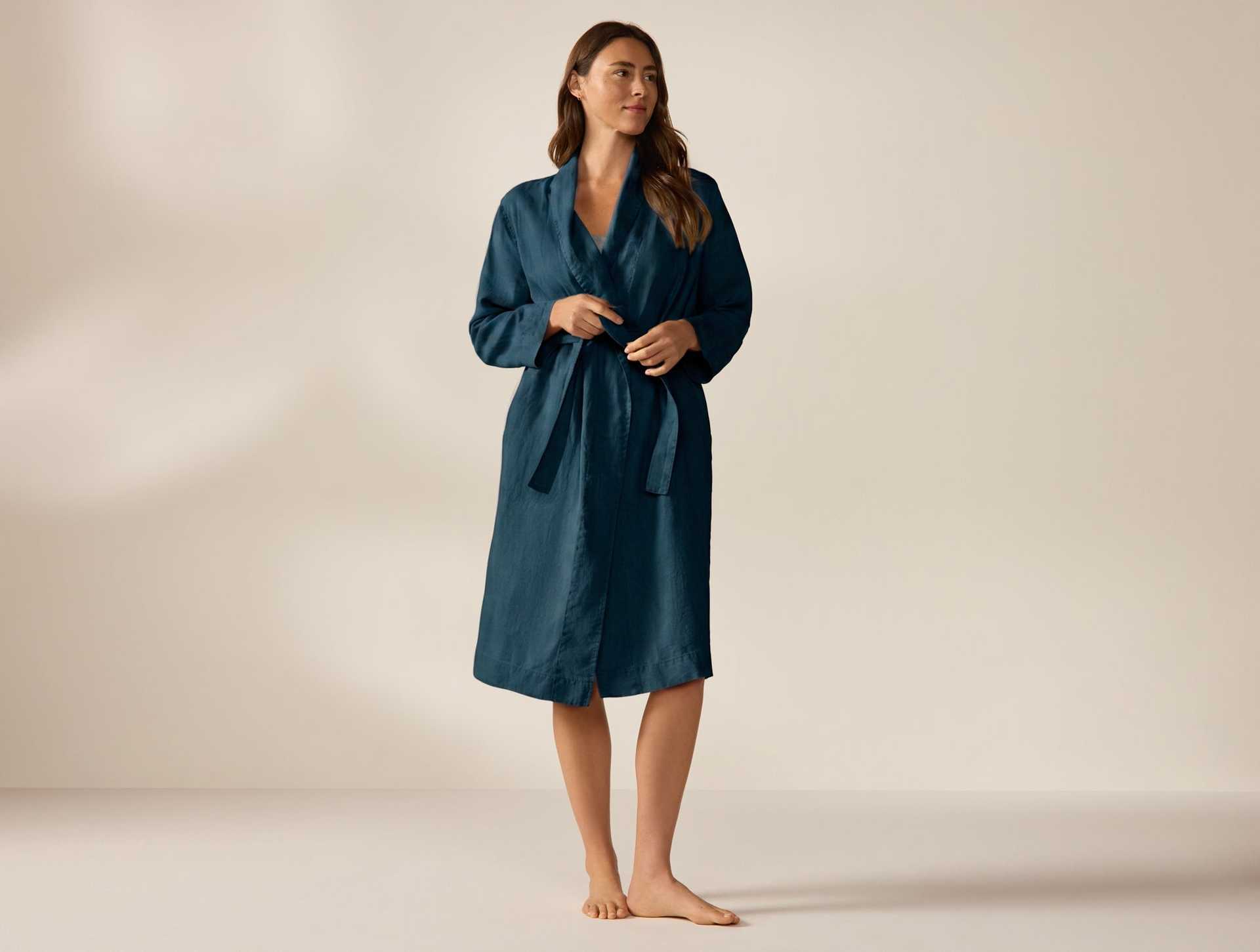
For example, the Coyuchi Women’s Organic Relaxed Linen Robe is described as 100% organic linen, with linen grown in France and woven in Portugal. Its listed features include a wrap closure with a self-tie belt, a slightly tapered silhouette, shawl collar, long sleeves, on-seam pockets, dog-eared belt loops, and a signature hem stitch. Those details point to a robe designed as a relaxed garment, rather than a plush terry towel robe. The listed care guidance is machine wash cold on a gentle cycle with like colors, tumble dry low and remove promptly, with warm ironing if desired.
Details such as origin and certification may also matter to shoppers. The product information identifies this robe as GOTS certified. If certifications are important to your purchase, check the current product listing and certification details for the item you are considering; labels and product specifications can change. A certification does not tell you whether the robe’s weight or texture will suit your preferences, so treat it as one part of a broader comparison.
How to compare robes before choosing
A useful comparison starts with a short list of priorities. Rather than trying to find a robe that is best at everything, decide which qualities matter most to your routine. You might prioritize post-shower absorbency, a lightweight feel, generous coverage, easy washing, or a particular texture. Then compare product descriptions against that list.
- For a towel-like feel: Look for terry or another clearly described looped, absorbent construction.
- For a breathable layer: Consider a woven robe made from linen or another lightweight fabric, keeping in mind that it is not a replacement for drying off with a towel.
- For warmth: Review the fabric construction, coverage, sleeve length, and fit—not just the material name.
- For easy movement: Check the robe’s cut, belt adjustment, sleeve shape, and pocket placement.
- For manageable laundry: Read the care label and consider whether the required wash and drying routine suits your household.
- For travel: Think about how much space the robe occupies and how practical it will be to dry after washing.
Product photographs can help show a robe’s shape, but they cannot reliably convey its weight or hand feel. If you can handle it in person, notice how the fabric falls, whether the seams feel smooth, and how easily the belt ties. If shopping online, read the full specifications and care instructions instead of relying on a brief tagline. When an important detail is missing—such as weight, garment length, or sizing—seek clarification before ordering.
A simple care routine for a linen robe
Care begins with the label on the garment. Even within one fiber category, finishes and construction can differ, so a general linen rule should never override the maker’s specific instructions. For the Coyuchi organic linen robe described above, the stated guidance is to machine wash cold on a gentle cycle with like colors, tumble dry on low, and remove promptly. Warm ironing is optional. Follow the current label on your robe if it differs from a product listing.
Before washing, close the belt loosely or wash it with the robe so it does not become separated. Check pockets, turn the garment inside out if appropriate, and avoid crowding the machine. A load with enough room for textiles to move can reduce tangling and uneven rinsing. Wash with similar colors, particularly when a garment is new or deeply colored, and use a mild detergent in the amount recommended for your machine and load.
Choose a gentle cycle and avoid unnecessarily hot water unless the care label specifically allows it. High heat and overly vigorous washing can place additional stress on fibers and seams. If stains are present, treat them promptly and test any stain product on an inconspicuous area first. Avoid chlorine bleach unless the label explicitly permits it; bleach can damage or discolor fabric.
After washing, remove the robe promptly. Leaving damp linen compressed in a washer can encourage musty odors and make creases harder to release. Follow the label for drying. Low tumble heat may be convenient, while air drying can reduce heat exposure; whichever method you use, provide enough room for the garment to dry fully. If hanging it, distribute the weight evenly to avoid stretching a damp section. Do not put the robe away while it is still moist.
Wrinkles are a normal feature of linen. If you prefer a smoother appearance, use a warm iron only as permitted by the care instructions, and avoid pressing a decorative stitch or seam more aggressively than needed. A slightly damp fabric may release creases more easily, but follow the garment’s label and test a small area first. If you enjoy linen’s relaxed look, there is no need to iron after every wash.
Keeping a robe fresh between washes
A robe does not necessarily need laundering after every wear, but it should be allowed to air out. Hang it somewhere with good airflow rather than leaving it folded on a bed or behind a bathroom door. Bathrooms can stay humid after bathing, so a robe that never dries fully may develop an unpleasant odor, regardless of fabric type.
Use a hook or hanger that supports the garment without stretching its shoulders. If the robe is damp, spread it open as much as practical so the interior and cuffs can dry. Avoid storing it in a crowded closet until it is completely dry. These small habits help maintain freshness and reduce the need for frequent washing, which can contribute to wear over time.
If the robe develops an odor, first check that it has dried thoroughly between uses and that the washing machine itself is clean. Rewash according to the label rather than increasing detergent or adding an unapproved treatment. Excess detergent can remain in fabric and may make it feel less fresh. For persistent problems, consult the garment maker’s care advice rather than combining household chemicals or experimenting with high heat.
Common bath robe assumptions to reconsider
“A heavier robe must be more absorbent.” Weight can be a clue, but construction matters. A fabric’s loops, weave, fiber, and density all contribute to how it takes up moisture. Look for an explicit description of absorbent or terry construction if that is your priority.
“Linen should feel soft immediately.” Some linen is finished to feel relaxed from the start, while other linen can have a firmer hand. It may soften through use and laundering, but the degree and pace vary. A naturally textured feel is not necessarily a sign that the robe needs harsh treatment or excessive softener.
“Every bath robe is meant to go on over wet skin.” Many robes are primarily cover-ups or lounge garments. A woven linen robe can be comfortable after bathing, but towel-drying first is sensible if you want to stay dry. Check the product description to understand the intended fabric experience.
“Wrinkles mean linen is damaged.” Creasing is common in linen and usually reflects the fabric’s character, not a problem. Follow the care label, and iron only if you prefer a neater finish.
The right choice is the one that fits your routine
Choosing a Coyuchi bath robe comes down to balancing sensation and practicality. A plush, looped robe may be the better match if you want a warm, absorbent layer immediately after showering. A linen style may suit you if you prefer a breathable, textured garment for getting ready or relaxing once you have dried off. Weight can help set expectations, but it should be considered alongside weave, fit, sleeves, pockets, and the way the robe will be cared for.
Before buying, confirm the exact product’s fabric composition, available sizing, construction, and current care instructions. Give particular attention to whether you want a towel-like robe or a light wrap; that distinction is more useful than assuming all bath robes offer the same performance. With expectations aligned to the fabric and a straightforward laundry routine, a well-chosen robe can become an easy, dependable part of everyday life.
Quick checklist
- Choose terry or another looped fabric if absorbency is your main priority.
- Consider woven linen for a breathable, garment-like layer, not as a direct replacement for a towel.
- Use fabric weight as one comparison point, not a complete measure of comfort or quality.
- Check the robe’s fit, belt, cuffs, pockets, and seam finishing for everyday practicality.
- Follow the care label, wash gently as directed, and let the robe dry fully between uses.