Bath Textiles · Buying Guide
How to Choose Bath Towels for Everyday Comfort
A great bath towel makes the everyday feel a little more comfortable. The best choice is not necessarily the thickest or softest one on the shelf: it’s the towel that absorbs well, dries at a pace that suits your home, feels pleasant against your skin, and stands up to frequent washing.
Published October 16, 2026
There’s a particular pleasure in reaching for a clean towel after a shower and finding one that feels just right: substantial without being cumbersome, absorbent without staying damp for hours, and soft without losing its shape after a few trips through the laundry. But with so many fibers, fabric weights, sizes, and finishes to compare, choosing bath towels can feel more complicated than it should.
A few practical details make the decision easier. Fiber content gives you clues about how a towel may feel and perform. Weight can help you estimate whether it will be light and quick to dry or plush and cozy. Construction, hems, and care instructions help reveal whether a towel is likely to suit your laundry habits and household routine.
The goal isn’t to find one perfect towel for everyone. It’s to find the right balance for the way you live. A busy family bathroom may call for a durable towel that can handle frequent laundering, while a smaller home with limited drying space may benefit from a lighter, faster-drying option. Here’s what to look for before choosing.
Start with how you’ll use the towel
Before comparing labels, consider what the towel needs to do. A bath towel used every day has different demands from a guest towel brought out occasionally. Think about how often the towel will be washed, how many people share the bathroom, and where it will hang between uses. These small details can matter as much as the fiber or color.
- For everyday family use: Look for sturdy construction, reliable absorbency, and care instructions that fit your usual laundry routine.
- For a compact bathroom: A lighter towel may be easier to hang and may dry more quickly when air circulation is limited.
- For a plush, spa-like feel: A heavier towel can feel enveloping and cozy, provided you have enough space and time for it to dry thoroughly.
- For guests: Choose a comfortable, easy-to-care-for towel that can be washed and stored without special handling.
- For travel or a gym bag: A thinner, lighter towel is often easier to pack and manage than a bulky bath sheet.
It’s also worth thinking about how many towels you need in rotation. Having a spare set gives used towels time to dry fully before they’re needed again. That can be particularly helpful in a humid bathroom or a household where laundry days are not always predictable.
Understand the most common towel fibers
Fiber content influences a towel’s hand, absorbency, durability, and drying behavior. There is no material that automatically wins in every category, so treat broad claims as a starting point rather than a guarantee. The final feel also depends on yarn quality, weave, pile, finishing, and care.
Cotton: a familiar all-rounder
Cotton is a common choice for bath towels because it can be absorbent, comfortable, and relatively straightforward to care for. Towels made from different cotton yarns may feel quite different, however. Some are smooth and crisp, while others have a lofty, plush surface. Labels may identify longer-staple cotton, but the fiber description alone does not tell the whole story; construction and the towel’s overall quality matter too.
For everyday use, cotton can be a practical option when you want a traditional towel feel and easy access to familiar care instructions. If softness is a priority, feel the towel if possible, but keep in mind that a store-soft finish may change after washing. A towel’s lasting comfort is better judged by how it performs over time than by its first touch alone.
Linen: textured and often lighter
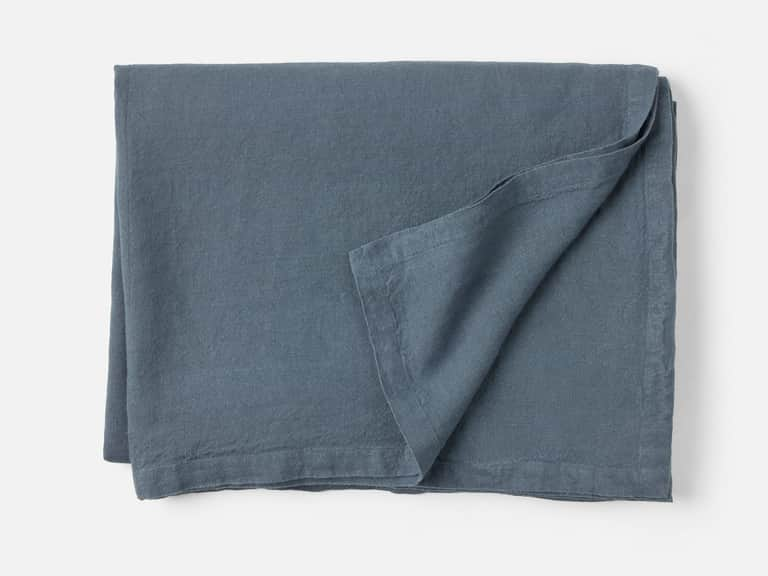
Linen is made from flax fiber and is known for a natural, textured feel. Compared with a thick, high-pile cotton towel, a linen towel may feel lighter and less fluffy. That can appeal to people who prefer a less bulky textile or want something that is easier to hang in a compact space. Linen’s distinctive surface also gives it a relaxed look that differs from the smooth, plush appearance many people associate with bath towels.
Because towels vary in weave and thickness, don’t assume every linen option will behave the same way. Check its care label and consider how you like a towel to feel against your skin. If you prefer deep softness and a cushiony pile, a traditional terry towel may suit you better. If you enjoy a lighter, more textured hand, linen or a linen blend may be worth considering.
Blends and other fibers
Some towels combine fibers to balance different qualities, such as softness, strength, texture, or ease of care. The blend ratio matters: a towel that contains a small percentage of one fiber may feel and perform differently from one in which that fiber is the majority. Read the full fiber label rather than relying on a broad description such as “natural” or “quick drying.”
When comparing a blend with a single-fiber towel, consider the practical question: does it suit your routine? If you wash towels often, you may value dependable construction and clear care instructions over a particular material claim. If you have sensitive skin or strong preferences about texture, the feel of the finished fabric should be part of the decision.
Towel weight: plushness versus drying time
Towel weight is commonly described in grams per square metre, or GSM. In general, a higher GSM means a denser, heavier fabric, while a lower GSM often indicates a lighter towel. Weight can offer a useful comparison when you’re looking at similar products, but it is not a direct score for quality, absorbency, or softness. The yarn, weave, pile height, and finishing all play a role.
A heavier towel may feel luxurious and substantial, with a thicker surface that many people enjoy after bathing. That added density can also mean a towel takes longer to dry, especially in a crowded bathroom, a cool room, or a home without a dryer. If a towel remains damp between uses, the plush feel may be less appealing in practice.
A lighter towel is usually easier to handle and may be a better fit for frequent washing, limited hanging space, or travel. It may not have the same enveloping feel as a heavier option, but a well-made lighter towel can still be comfortable and useful. When comparing bath towels, weigh the sensation you want against the time and space you can offer for drying.
If a product listing includes GSM, use it as one clue—not as a shortcut. If it doesn’t, look at the stated material, construction, product dimensions, and care information. Reviews may help you understand how a towel feels after repeated laundering, but focus on specific comments about absorbency, drying, and durability rather than general praise alone.
Look closely at construction and finishing
Most classic bath towels are made with a looped pile, often called terry. The loops create a surface that can take up moisture and give the towel its familiar soft texture. Loop height, density, and evenness affect how the towel feels. A close look can help: loops should appear reasonably consistent, and the body of the towel should feel balanced rather than thin in some areas and bulky in others.
Edges deserve attention, too. Hems help finish the towel and keep its edges tidy. Check that they are even and securely stitched, without loose threads or obvious gaps. A towel is handled, folded, washed, and dried repeatedly, so a neat finish is a small but meaningful sign of considered construction. Decorative borders can be attractive, but make sure they do not make the towel less comfortable or awkward to fold.
Also consider how the towel feels when folded and held. Does it bend easily, or feel stiff and board-like? Is its surface comfortable against your skin? Does the size suit the way you like to wrap up? These questions are simple, but they bring the decision back to everyday use rather than appearance alone.
Choose a size that works for you
“Bath towel” and “bath sheet” generally refer to different sizes, but exact measurements vary by maker. A standard bath towel is designed for routine drying and is usually easier to wash and store. A bath sheet is larger, offering more coverage and a more generous wrap. That extra fabric can be wonderful if you like to bundle up after a shower, but it also takes more room on a towel rail and in a laundry load.
Check the dimensions on the product label or listing instead of relying on the name. Consider your height, preferred coverage, available hanging space, and washing-machine capacity. If the towel is for a child or a small bathroom, a standard size may be more convenient. If you want to wrap your whole body comfortably, a larger bath sheet may be the better choice.
Hand towels and washcloths can be chosen to coordinate, but they don’t have to match exactly. The important thing is that each size serves its purpose and can be laundered in a way that suits the household. A thoughtfully chosen set is one that gets used, dries adequately, and fits neatly into your storage space.
Use care labels as part of the buying decision
A towel’s care instructions are not an afterthought. They tell you how to maintain the fabric and can help you decide whether the towel fits your real routine. Check the recommended water temperature, wash cycle, drying method, and any cautions about bleach or fabric softener. If you prefer a particular laundry method, choose a towel whose label supports it.
It can also help to think about washing frequency. Towels used daily may need laundering more often than towels kept for occasional guests. A color that can be washed with the rest of your household textiles may be more convenient than one that requires careful sorting. Dark and vivid colors can sometimes benefit from being washed separately at first; always follow the manufacturer’s guidance.
When a care label recommends a gentle cycle or a lower drying temperature, take that seriously. Aggressive heat and harsh treatments can affect the surface and lifespan of textiles. A simple, repeatable routine is usually more useful than elaborate fabric-care steps that are difficult to maintain.
A simple towel-care routine
Good towel care starts before the towel goes into the washer. Shake towels out, avoid packing the machine too tightly, and wash them according to the care label. An overloaded washer can make it harder for water and detergent to circulate through bulky items. Using the recommended amount of detergent helps avoid unnecessary residue, which may affect the way fabric feels.
- Wash with similar items. Group towels by color and, when practical, by fabric weight. This can help prevent color transfer and reduce tangling with delicate garments.
- Follow the label. Use the stated water temperature and cycle instead of assuming every towel needs the same treatment.
- Use products thoughtfully. Avoid adding more detergent than directed. Follow label guidance on bleach and fabric softener; excess products or unsuitable additives may affect absorbency or fibers.
- Dry thoroughly. Tumble dry or line dry as instructed, making sure towels are completely dry before folding and storing. Air movement helps towels dry between uses.
- Store in a dry place. Fold towels only when fully dry and keep them in a clean, well-ventilated cupboard or shelf.
Between washes, spread a towel out rather than leaving it bunched on a hook or floor. A bar or wide rail can allow more of the surface to receive air. In a humid bathroom, improved ventilation can help textiles dry more effectively. These small habits support freshness and make a towel more pleasant to reach for the next time.
Common towel-buying mistakes to avoid
Choosing by softness alone. A towel that feels exceptionally soft in a shop may not be the best match for a household’s drying space or laundering habits. Consider absorbency, construction, and care requirements alongside first impressions.
Assuming heavier always means better. Weight can contribute to a plush feel, but a dense towel may take longer to dry. The right weight depends on whether you prioritize coziness, quicker turnover, or easier storage.
Ignoring the dimensions. A towel that looks generously sized in a product photo may be smaller than expected. Compare listed measurements with a towel you already like.
Overlooking the care label. If the recommended routine feels too demanding, the towel may not be a practical choice, no matter how appealing it looks.
Buying an entire set without checking the mix. Sets can be convenient, but check how many towels they include and the dimensions of each piece. Make sure the assortment matches what your household actually uses.
Expecting every towel to feel identical. Fiber, weave, finishing, and laundering all influence the final hand. Even towels made from the same broad material can have noticeably different textures and drying behavior.
A quick checklist before you decide
- Does the fiber and texture feel comfortable to you?
- Is the towel’s weight suitable for your preferred level of plushness and available drying space?
- Are the dimensions right for the way you use and store towels?
- Do the hems and pile appear evenly finished?
- Can you follow the care instructions with your usual laundry routine?
- Will the towel be washed frequently, and does its construction seem appropriate for that use?
- Does the color work with your laundry habits, not just your bathroom palette?
If you’re shopping online, look for clear fiber content, measurements, and care details. If those basics are missing, it may be difficult to judge whether a towel will meet your needs. Product descriptions that explain construction and maintenance are often more useful than vague promises about luxury or performance.
The best towel is the one you’ll enjoy using
Choosing bath towels comes down to a handful of useful trade-offs. A plush, heavy towel can make a bathroom feel especially inviting, but it may need more time and room to dry. A lighter towel can be easy to wash, hang, and store, though it may offer a less cushioned feel. Cotton, linen, and blends each bring different textures and practical considerations, while well-finished hems and sensible care instructions can support lasting use.
Start with your routine, then narrow the options by material, weight, size, and construction. A towel doesn’t need to be elaborate to be a good one; it needs to absorb comfortably, suit your preferences, and hold up to the way you care for it. Choose with those everyday details in mind, and the right towel will earn its place in your bathroom long after the first wash.